 Advertisement
The American people sent a clear message this election: Congress must put affordability front and center, and that includes child care. Congress can take action to lower the cost of child care now as we build capacity for universal child care system.
For years, parents have sounded the alarm about the high cost of child care. Families across the country are struggling to stretch every paycheck to cover necessities, and the cost of child care is out of reach for too many. Low wages keep people from entering the field, reducing options for parents and children.
This doesn’t just affect families; employers need a functioning child care system to hire and keep employees. I spoke with a mother who works part time as a substitute teacher. She wants to get a more stable job, but she can’t because Columbia County Oregon, where she lives with her husband and young daughter, is a child care desert.
Affordable, accessible, quality early care and education benefits children, families, employers, and the economy. According to the Institute for Child Success, the lack of affordable child care costs families an estimated $134 billion in lost earnings, productivity, and revenue, and the Bipartisan Policy Center estimates that the lack of affordable and reliable child care will cost the economy as much as $329 billion over the next ten years. This is not a failure on the part of parents or providers; it is a failure of policymakers.
There is not a one-size-fits-all solution to solving the child care crisis, nor should there be. Every family has different needs, and our child care system must reflect this reality and a family’s preferences for care.
In the next Congress, we should immediately pass robust funding for our federal child care programs to help lower costs for families now while we work with urgency to enact universal coverage. The Child Care and Development Block Grant program (CCDBG) helps families access affordable, quality child care while also strengthening and expanding the child care workforce. Congress has not renewed this essential program since 2014, and now only 14 percent of eligible children can participate in the program nationwide.
Similarly, Head Start, a critical early childhood education program designed to promote school readiness, has not been renewed since 2007. Now is the time. Last year Congress gave the Department of War more than $1 TRILLION. Certainly, some of that should go to babies, not bombs.
Congress must update CCDBG and Head Start, as well as significantly increase the funding for both programs. According to the First Five Years Fund, these programs are proven to help families keep more money in their pockets, stay in the workforce, and strengthen household and economic stability.
Additionally, Congress must do more to support early childhood professionals. The cost of operating a child care program has increased and payments to care providers remain alarmingly low. It’s time to intervene with dedicated funding and support for the early childhood workforce. Many states stabilized and even grew the supply of child care with COVID-19 relief funding. With more funding and higher wages, we can increase the supply of child care providers and give families more options for care.
With these investments, more children can experience the cognitive, social, and behavioral benefits from attending high-quality programs. Children’s brains develop rapidly from birth to five years old, and quality child care supports healthy development and builds foundational skills for reading, vocabulary, math, self-control, and social-emotional development. It’s a good investment. According to economist James Heckman, we save anywhere from $4 to $16 for every dollar we spend on early childhood education.
Lawmakers on both sides of the aisle agree that investing in child care and Head Start is financially responsible for the future of our country. By finally delivering on this essential investment in CCDBG and Head Start, we can increase the number of children and families who can access child care and take long overdue steps towards universal child care.
As a candidate to Chair the Education and Labor Committee, I look forward to collaborating with my colleagues to solve this challenge and create a better future for children and families in Oregon and across the country.
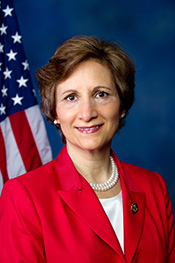
Congresswoman Suzanne Bonamici represents the First Congressional District of Oregon, which includes large portions of Washington and Multnomah Counties, and Tillamook, Clatsop, and Columbia counties.


Over the past several decades, extraordinary breakthroughs in cancer research and treatment have transformed patient outcomes, offering renewed…


After the January 2025 midair collision near Washington National Airport (DCA), the NTSB cited many probable causes. But…


All year, moderate women told me they weren’t sure their ballots would be counted fairly. On November 3,…
 Advertisement
On the record or off. Lawmakers, staffers, lobbyists, journalists — if it belongs on Capitol Hill, we want to hear it.
Thanks for reaching out. We review every pitch and will follow up if we want to pursue the story.