I live for Saturdays in the fall, trading cable news for ESPN’s “College GameDay.” For four quarters, I try to drown out politics with Ole Miss football, though any SEC team will do in a pinch.
This season, though, my two worlds are colliding. Nick Saban is pitching federal legislation during commercial breaks, and Sen. Ted Cruz (R-TX) has turned up on the “GameDay” set. As I head back to Washington after a big win and sweet revenge in Oxford this weekend, I realize there’s no keeping politics on the sidelines anymore.
The Protect College Sports Act has pulled together one of the broadest coalitions I have seen on any issue in this town. Nearly 30 conferences, more than 370 schools in all 50 states, Historically Black Colleges and Universities (HBCUs), Team USA and coaches like Saban who live to win are all wearing the same jersey. Washington has always produced strange bedfellows, but even by those standards this is quite a lineup.
This is what happens when an industry runs out of runway. When name, image and likeness (NIL) payments became legal in 2021, they cracked open a market with no rules. In the five years since, college sports has run on a patchwork of state laws, conference decisions made on the fly and a docket of lawsuits nobody can keep straight. Ask any athletic director how many years of eligibility a transfer has left and watch them reach for a lawyer instead of an answer.
I think the coalition matters more than the bill’s individual provisions, though those matter, too. In Washington, breadth is a signal, so look at who has signed on. The Big Ten and the SEC, Republicans and Democrats. Hundreds of schools with wildly different budgets. When that many competing interests put their names on the same framework, the problem has gotten big enough that everyone would rather negotiate than keep litigating.
That is leverage, and leverage has a shelf life. Coalitions built on urgency don’t hold forever, and the Senate calendar empties out fast once the campaign season takes over.
The opposition deserves to be taken seriously. Sen. Chris Murphy (D-CT) argues the bill locks in limits on what athletes can earn while they generate enormous revenue for everyone else. That objection deserves a real answer, and talking points won’t do. So do the questions labor advocates are raising about what the bill means for athletes’ ability to bargain collectively down the road.
What strikes me most is who is doing the talking. The loudest voices in this fight belong to coaches, players and university presidents. The legislators and lobbyists are mostly in the background, and the biggest stage has been “GameDay” instead of the Senate floor. Cruz took his pitch to ESPN and made his case despite a tough crowd. Pat McAfee and Saban spent real airtime explaining it in plain English to an audience that will never read a section-by-section summary. Coalitions in this town rarely talk to the public directly. This one is.
I have seen what these programs mean to a campus and to a state like Mississippi, and I’ll be the first to say this bill is imperfect. Nothing written to clean up five years of chaos could be. But it is the first serious attempt to replace the patchwork with a foundation everyone can stand on, and it has more support behind it than any comparable effort, including its predecessor that died quietly in the House.
Lately, I turn on college football looking for hours of reprieve from Washington and get a segment on federal preemption instead. I understand why. When an industry needs Congress badly enough to buy commercial breaks during football season, that tells you more about the stakes than any committee hearing will. Last week the Senate voted 74-24 to take up the bill, and final passage and the House are still ahead. Nearly 30 conferences and senators from both parties did not end up in the same team by accident.
When the Big Ten and the SEC agree on something, Washington should take the hint and finish the job while that alignment still holds.
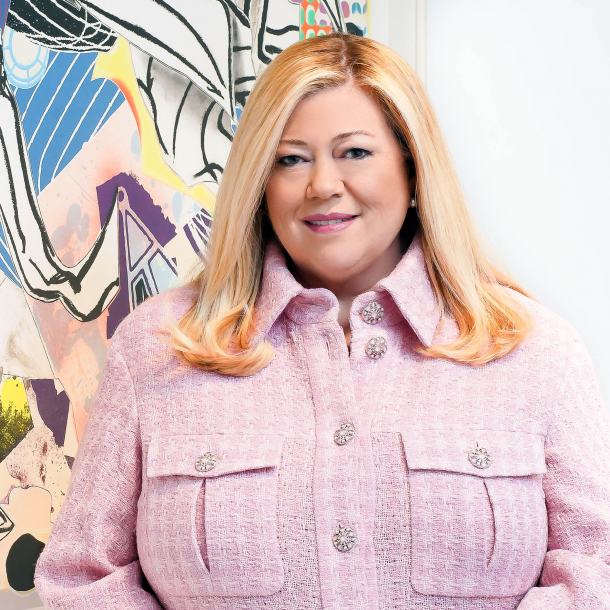
Kimberley Fritts is the founder and CEO of Cogent Strategies, a bipartisan public affairs firm in Washington. A Mississippi native, she is a die-hard Rebel fan and a board member of the Ole Miss Women’s Council for Philanthropy.

When a skater steps onto the ice in an arena filled with spectators, and millions more watching at…

The United States faces a housing shortage of over 4 million homes, according to the U.S. Chamber of…

The stablecoin debate has produced no shortage of bold promises from the digital assets sector: faster payments, broader…
On the record or off. Lawmakers, staffers, lobbyists, journalists — if it belongs on Capitol Hill, we want to hear it.
Thanks for reaching out. We review every pitch and will follow up if we want to pursue the story.