Across Arkansas and throughout the country, small and mid-size business owners are staring down the most significant technology transition since the rise of the internet. Artificial intelligence is quickly becoming a necessity for Main Street businesses. Competitors are adopting it, and customers are expecting it. And the businesses that wait too long risk being left behind permanently, just as those that waited too long to get online in the early 2000s learned the hard way.
The planning needed depends entirely on something Washington seems incapable of providing: predictability.
Taxes are among the highest fixed costs any business carries, and when the tax code is unstable, every long-term investment becomes a gamble. When owners calculate the cost of new technology, they shouldn’t have to worry whether the government will change the rules while they’re still paying for it.
In 2017, Congress enacted the Tax Cuts and Jobs Act, which brought the U.S. corporate tax rate to a globally competitive level for the first time in a generation. The results were significant. Domestic capital investment rose by 20 percent. Businesses used that money to buy equipment, expand operations, and create higher-paying jobs. For the first time in years, American companies weren’t at an automatic disadvantage against foreign competitors.
Last year, Congress took the critical next step. The Working Families Tax Cut maintained the competitive business tax rate, giving companies the long-term certainty they need to make major investment decisions with confidence.
I spent two terms representing Arkansas in the United States Senate as a Democrat. I remain a proud Democrat, and I’m rooting for my party’s success this November. But I also know that when political power shifts – and it always does – the temptation to rewrite the tax code for short-term messaging wins can be overwhelming. I’ve watched both parties do it.
And that is why today I urge my fellow Democrats: don’t use the corporate rate as a political football.
I say this not as a partisan concern, but as a practical one. Uncertainty is the most expensive tax of all. When business owners can’t predict their costs, they don’t invest. When they don’t invest, they don’t grow. And when Main Street stops growing, entire communities feel it.
This isn’t a partisan argument. It’s a math argument, grounded in practical reality. A business owner evaluating a $400,000 AI investment needs to know what her effective tax rate will be, not just this April, but next April and the April after that. She needs to know that the rules won’t change because one party gained a few seats in a midterm election.
Business owners are not alone in wanting stability in the tax code. Recent polling shows that the American people share my concerns about the effects of a corporate tax rate increase. A bipartisan majority of Americans reject higher prices, lower wages, and offshoring as a tradeoff for a corporate tax increase. And 72 percent of likely voters oppose a corporate tax rate hike if it hurts American small businesses and job creators.
The long-term value of this legislation depends on whether businesses trust that Washington will maintain a stable, competitive tax code. Consumer spending is the demand side of the equation. Business investment is the supply side. Both have to be present for communities to thrive.
Congress should stop treating tax policy as a season-by-season negotiation and start treating it as what it actually is: the operating environment for every business in America. The owners I meet across Arkansas aren’t asking for special treatment. They’re asking for the ability to plan. They’re asking for a tax code that doesn’t move the goalposts every time the political winds shift.
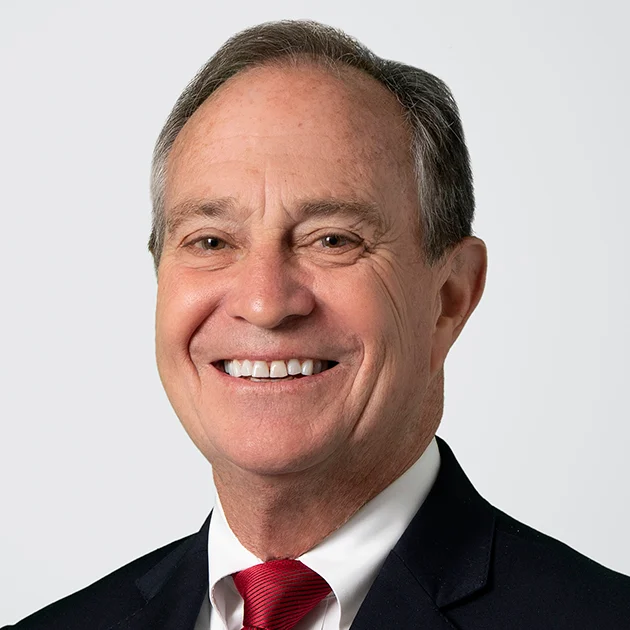
Blanche Lincoln represented Arkansas in the U.S. Senate as a Democrat from 1999 to 2011. She currently serves as an adviser to the RATE Coalition.

Across the country, families are doing the same math: how to stretch a paycheck a little further to…


When diesel is more than $6, it harms the American economy, as well we directly impacting farmers, trucking…

Super PACs. Dark money. Billionaires spending millions to influence elections. Americans are rightly concerned about where political money…
On the record or off. Lawmakers, staffers, lobbyists, journalists — if it belongs on Capitol Hill, we want to hear it.
Thanks for reaching out. We review every pitch and will follow up if we want to pursue the story.