Modern political campaigns increasingly rely on creators to deliver messages directly to voters in an authentic voice. Soon, this chaotic, largely unregulated creator landscape will collide with a 2028 presidential cycle where partnerships with digital personalities without proper caution could leave campaigns open to unpredictable liabilities.
Operating entirely outside the traditional broadcast standards and federal oversight that govern conventional media, the creator economy currently functions as a “Wild West” where accountability is entirely self-policed. While Republicans took an early lead in leveraging creator reach, Democrats, racing to catch up, must proceed thoughtfully. Before you roll your eyes at a nerdy opposition researcher who hears “TikTok” and thinks of Kesha’s 2009 hit single rather than a social media platform, stay with me for a beat.
Like candidates, influencers are human—complex and imperfect creatures. But unlike disciplined politicians, their brands are forged in thousands of hours of unscripted livestreams and off-the-cuff posts. When campaigns relegate creator vetting to a casual afterthought, they commit political malpractice. The very authenticity that gives a creator their superpower can instantly become a campaign’s greatest liability.
Influencers can reach millions of voters instantly, making authentic engagement a political necessity. We anticipate a wide array of millennial presidential candidates in 2028 more adept at communicating in partnership with creators than their GenX and Baby Boomer counterparts. That comfort, however, must reflect an understanding that political gravity still applies, even in the creator space.
My team spent much of 2026 vetting influencers and creators. The volume of problematic posts and hidden criminal charges we found should foreshadow what’s to come. High-profile missteps also offer a stark warning: Hasan Piker’s controversial rhetoric proved toxic enough that a Michigan Senate candidate was forced to publicly rebuke him, and Trump faced backlash when he hosted a “Pizzagate” conspiracy theorist at a White House influencer briefing.
Far too many campaigns operate under the dangerous illusion that digital spaces are lawless lands where online audiences are immune to traditional political accountability. That is a losing strategy. When a campaign aligns itself with any creator, it isn’t just borrowing an audience; it’s inheriting an entire digital footprint. The consequences of past behavior are not hypothetical; they are a mathematical certainty. Failing to vet influencers turns easily accessible evidence—such as graphic or offensive comments or even serious criminal charges within years of archives—into opposition fodder that could blow up on the national stage, forcing the campaign to deal with preventable chaos. Furthermore, the press corps will inevitably treat these creators as de facto spokespeople for the campaign. Instead of spending valuable news cycles proactively delivering a core message, campaigns will be forced into a defensive crouch responding to questions about an influencer’s controversial statements.
The worlds of online influencers and politics will only grow closer, and campaigns should be careful about who they trust to carry their message. A superficial, cursory vetting job won’t cut it when a surrogate has five thousand hours of recorded video online. Winning campaigns in today’s environment require a more robust vetting operation, and it must be an ongoing process. Campaigns should proactively interrogate these digital records to stress-test our assumptions and expose vulnerabilities before the opposition does.
Engaging content creators is an important tool for reaching modern audiences, but this strategy requires a careful balance. Vetting and rigorous due diligence let campaigns evaluate and manage risk. We owe it to the cause and the electorate to do our homework—not out of fear of opposition attacks, but because building lasting voter trust requires absolute thoroughness in a fast-moving media landscape. We are living in a new era that requires campaigns to adapt. While borrowing a creator’s reach can elevate a campaign, only thorough vetting and constant conversation can ensure the clock won’t stop on your message before it even starts.
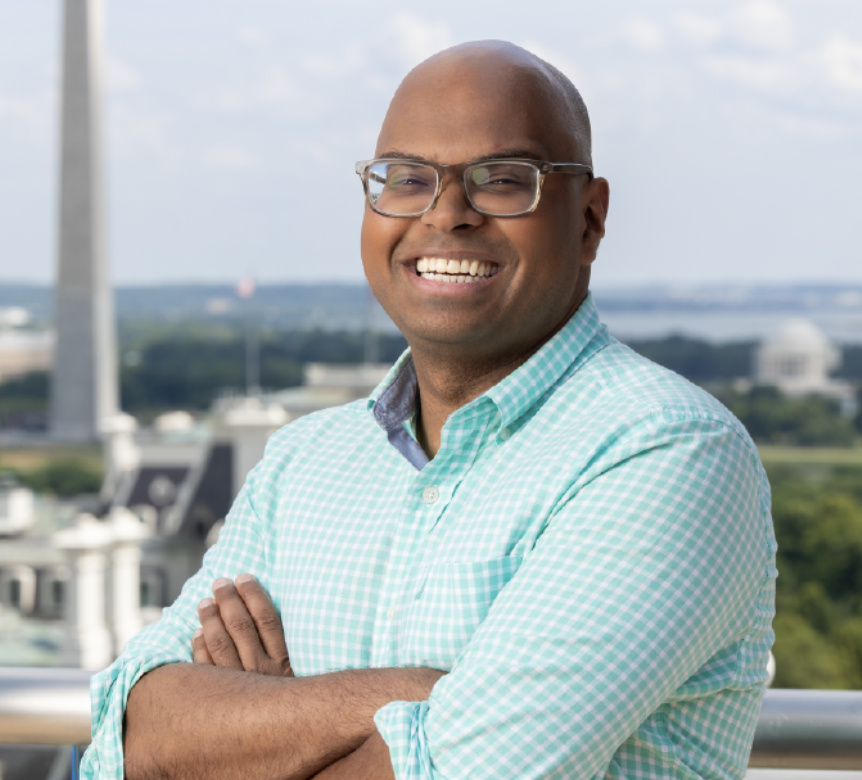
Atanu Chakravarty has been a Democratic strategist on some of the most high profile campaigns for over a decade and has spent over a decade in political research. He is a Vice President at Arc Initiatives, in Washington, D.C., where he runs the firm’s research arm.
The debate over artificial intelligence in the United States tends to treat energy policy and export controls as…

America’s highways, bridges, runways, water systems, hospitals, schools and military installations depend on cement. It is a foundation…

Despite our proud legacy of public-health advances, Americans live in a “sleep desert.” That’s because restful, restorative sleep…
On the record or off. Lawmakers, staffers, lobbyists, journalists — if it belongs on Capitol Hill, we want to hear it.
Thanks for reaching out. We review every pitch and will follow up if we want to pursue the story.